I've lost count of the number of HR people I've shocked by showing the labour code definitions of what "flexible hours" and "flexible time" actually mean, legally.
Usually the response is to quietly replace it in all internal documents with "variable start time" and "core hours" and hope nobody notices it.
- You can set your own work hours (as long as they include the core hours and you get signed permission from your manager and their manager and they're allowed to deny your shifted time at any point if it interferes with "operational needs". The manager defines what "operational needs" means).
- You only need to come into the office twice a week (but we'll tell you which days to come in, you need to make up any days you miss, and we can change those days with very little notice; oh and we have the results from a wellness survey that said that people who worked from home more had better mental health and overall wellness than those who worked in the office and decided the solution was to add a mandatory in-office day).
- We encourage you to take sick time when you need it (but only if you can't shift your lunch break to cover or move those workhours to a different day; and if you are supposed to be in the office that day, you must shift your in-office day to another day that week; and we will message you if you are taking too many sick hours; and we will tell you that you can't use sick time for non-specialist doctor's appointments even though policy says that you can use sick time for any medical appointments).
We’re so flexible.”
^ not even satirized. Legitimate policies/rules/conversations.

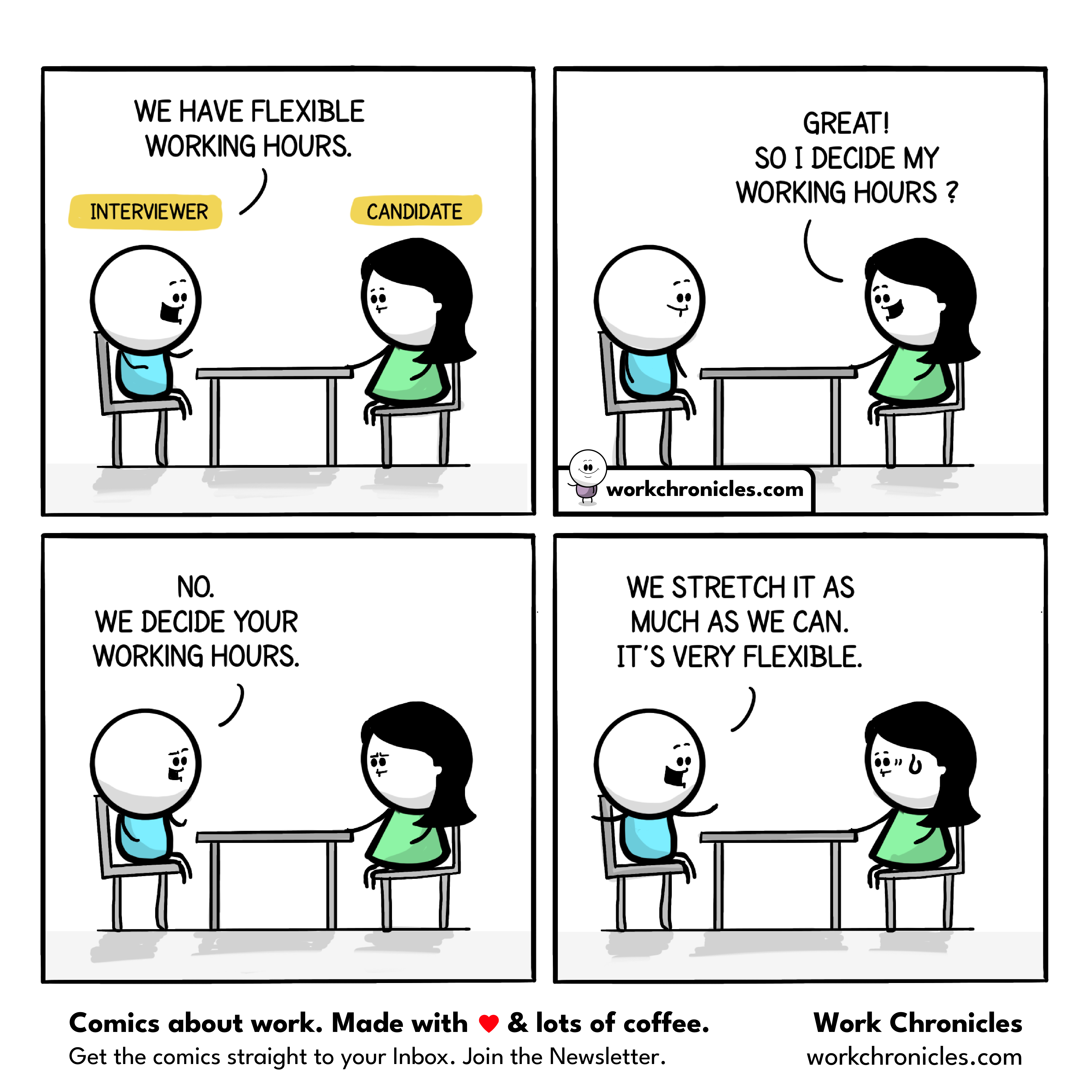
I've lost count of the number of HR people I've shocked by showing the labour code definitions of what "flexible hours" and "flexible time" actually mean, legally.
Usually the response is to quietly replace it in all internal documents with "variable start time" and "core hours" and hope nobody notices it.
"We're very flexible:
- You can set your own work hours (as long as they include the core hours and you get signed permission from your manager and their manager and they're allowed to deny your shifted time at any point if it interferes with "operational needs". The manager defines what "operational needs" means).
- You only need to come into the office twice a week (but we'll tell you which days to come in, you need to make up any days you miss, and we can change those days with very little notice; oh and we have the results from a wellness survey that said that people who worked from home more had better mental health and overall wellness than those who worked in the office and decided the solution was to add a mandatory in-office day).
- We encourage you to take sick time when you need it (but only if you can't shift your lunch break to cover or move those workhours to a different day; and if you are supposed to be in the office that day, you must shift your in-office day to another day that week; and we will message you if you are taking too many sick hours; and we will tell you that you can't use sick time for non-specialist doctor's appointments even though policy says that you can use sick time for any medical appointments).
We’re so flexible.”
^ not even satirized. Legitimate policies/rules/conversations.