As the saying goes, no plan survives initial contact with the enemy. Unknowns derail the best of plans, which is why proper planning assumes there will are unknown factors that will appear, and the plan will adapt to them.
Of course, pointing this out to planners who love to make rigid plans that are expected to go on for years (I've seen a spreadsheet that had over 30,000 actions spread out over five years, broken down by week) is heresy.
When I pointed that out to a planner once, she said "your problem is that you keep thinking that cause and effect are related", to head nods by management.
Sometimes, you don't know if a project is failing until you're in the middle of it. And some, you can tell before it even starts.
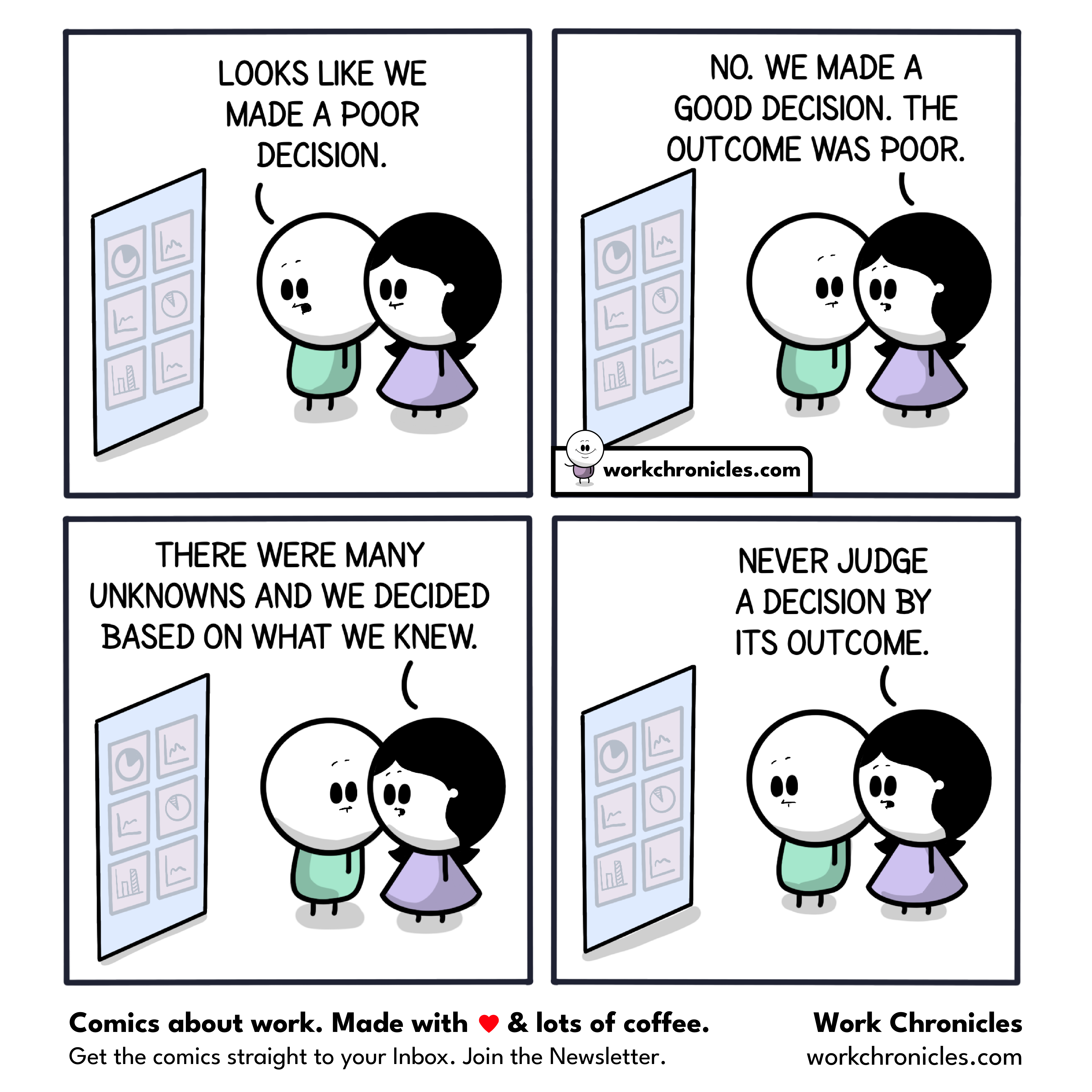
You can do all the research and hard work and make a decision and just turns out to the wrong one. That's a good decision with a wrong outcome.
And you can make a bad decision based pure whimsy that by sheer luck happens to be the right one.
But when making many decisions, on average your good decisions will have positive results. So if try your best to make good decisions, you will be right more often than not.
Also, when it's a good decision, you will be able to defend that decision even if it was the wrong one.
However, you still want to look at what exactly went wrong and learn from it, so you can improve your future decisions.

As the saying goes, no plan survives initial contact with the enemy. Unknowns derail the best of plans, which is why proper planning assumes there will are unknown factors that will appear, and the plan will adapt to them.
Of course, pointing this out to planners who love to make rigid plans that are expected to go on for years (I've seen a spreadsheet that had over 30,000 actions spread out over five years, broken down by week) is heresy.
When I pointed that out to a planner once, she said "your problem is that you keep thinking that cause and effect are related", to head nods by management.
Sometimes, you don't know if a project is failing until you're in the middle of it. And some, you can tell before it even starts.
Partially right.
There are good decisions and bad decisions.
And there correct decisions and wrong decisions
You can do all the research and hard work and make a decision and just turns out to the wrong one. That's a good decision with a wrong outcome.
And you can make a bad decision based pure whimsy that by sheer luck happens to be the right one.
But when making many decisions, on average your good decisions will have positive results. So if try your best to make good decisions, you will be right more often than not.
Also, when it's a good decision, you will be able to defend that decision even if it was the wrong one.
However, you still want to look at what exactly went wrong and learn from it, so you can improve your future decisions.