I worked at a bank where executive management required every team to write their own mission statement. We thought it was silly, but we did it. Oddly enough, once we had, we actually found it surprisingly useful to have.
A mission statement answers the questions "What are we doing?", and "What are we trying to achieve?". A good mission statement answers both, preferably in as short and concise a manner as possible.
In our case, we were an R&D group that was responsible for designing and building trading floors, and management wanted "showcase" floors, something that would look impressive in both the financial papers and the technology trade press.
We decided our mission statement was "research and investigate new technologies to design and build the best possible trading floor". We found ourselves quoting it when interviewing new hires, when explaining to other groups what we were doing, and when talking to vendors trying to get them to give us evaluation units. It was also surprisingly useful in shielding us from having work dumped on us from other groups, on the grounds that it was outside of our mission.
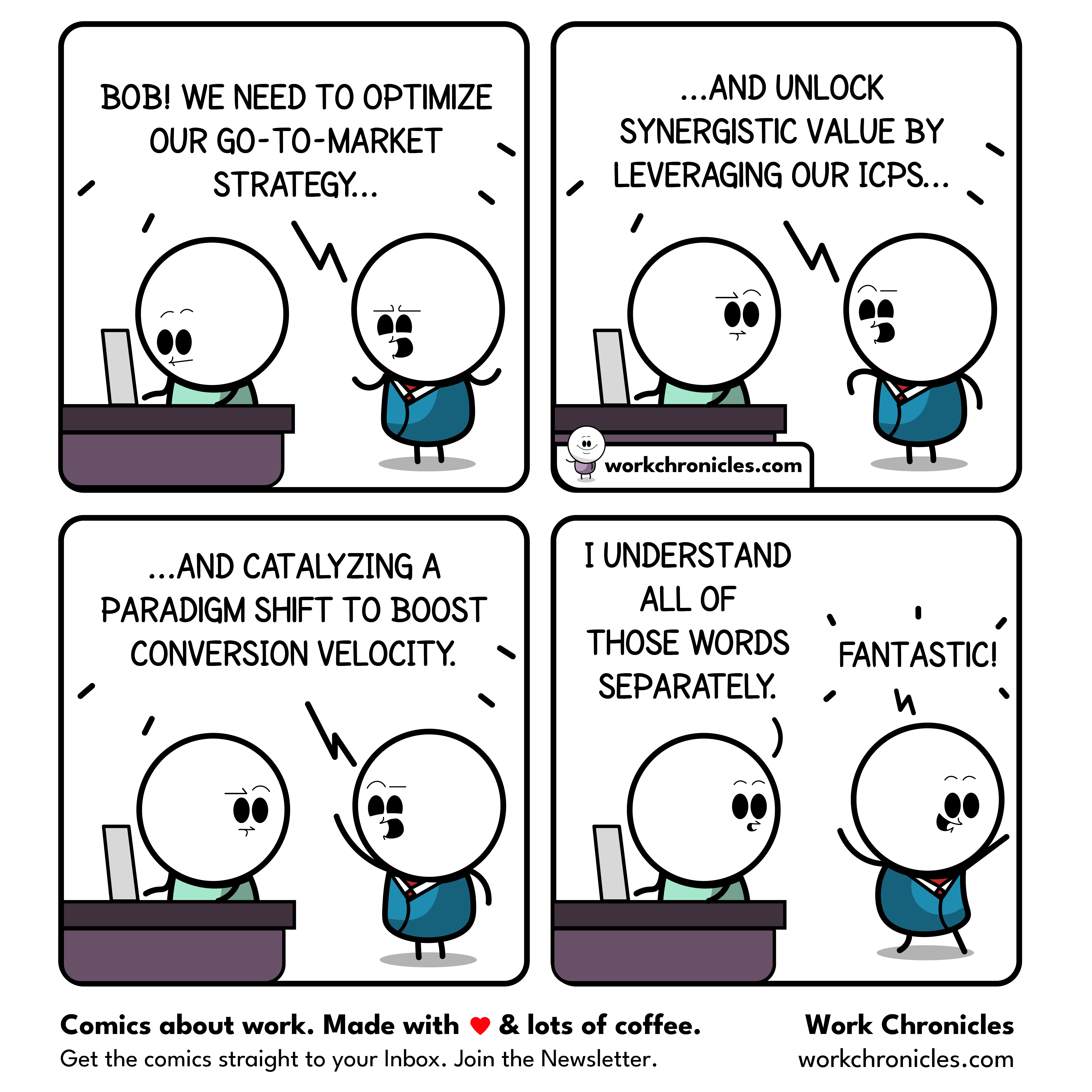
In contrast, when we asked one of the finance guys what his group did, he walked us over to his work area, and showed us a plaque on the wall with their mission statement. It was a firehose of buzzwords about how they were embracing this, deconstructing that, and defending a third thing in order to respect something else.
Not one person in his department could recite their mission statement without reading it. Not one of them could say how what he was doing that day helped achieve that mission. There wasn't a single quantifiable verb in their four paragraph mission statement.
No one could say what it meant, which just showed that it didn't mean anything.
An exec later told me that the reason they asked groups to write their own mission statements was to see which groups actually knew what they were doing. If a group couldn't write a mission statement describing what it was doing, they probably don't know. If they couldn't describe what they were trying to achieve, they likely weren't achieving much.
Unfortunately "firehose of buzzwords" was the norm. Groups with clear, comprehensible mission statements like ours were the exception.
On the upside, when layoff season arrived a few months later, they spared all the groups with builders (like my group), designers, and engineers. They culled all of the recontextualizers, incubators, orchestrators, and incentivizors.

Bet he’s just repeating what he heard his boss say. He doesn’t understand it either.
Ah, the mission statement.
I worked at a bank where executive management required every team to write their own mission statement. We thought it was silly, but we did it. Oddly enough, once we had, we actually found it surprisingly useful to have.
A mission statement answers the questions "What are we doing?", and "What are we trying to achieve?". A good mission statement answers both, preferably in as short and concise a manner as possible.
In our case, we were an R&D group that was responsible for designing and building trading floors, and management wanted "showcase" floors, something that would look impressive in both the financial papers and the technology trade press.
We decided our mission statement was "research and investigate new technologies to design and build the best possible trading floor". We found ourselves quoting it when interviewing new hires, when explaining to other groups what we were doing, and when talking to vendors trying to get them to give us evaluation units. It was also surprisingly useful in shielding us from having work dumped on us from other groups, on the grounds that it was outside of our mission.
In contrast, when we asked one of the finance guys what his group did, he walked us over to his work area, and showed us a plaque on the wall with their mission statement. It was a firehose of buzzwords about how they were embracing this, deconstructing that, and defending a third thing in order to respect something else.
Not one person in his department could recite their mission statement without reading it. Not one of them could say how what he was doing that day helped achieve that mission. There wasn't a single quantifiable verb in their four paragraph mission statement.
No one could say what it meant, which just showed that it didn't mean anything.
An exec later told me that the reason they asked groups to write their own mission statements was to see which groups actually knew what they were doing. If a group couldn't write a mission statement describing what it was doing, they probably don't know. If they couldn't describe what they were trying to achieve, they likely weren't achieving much.
Unfortunately "firehose of buzzwords" was the norm. Groups with clear, comprehensible mission statements like ours were the exception.
On the upside, when layoff season arrived a few months later, they spared all the groups with builders (like my group), designers, and engineers. They culled all of the recontextualizers, incubators, orchestrators, and incentivizors.